 Subscribe: Gist E-Paper
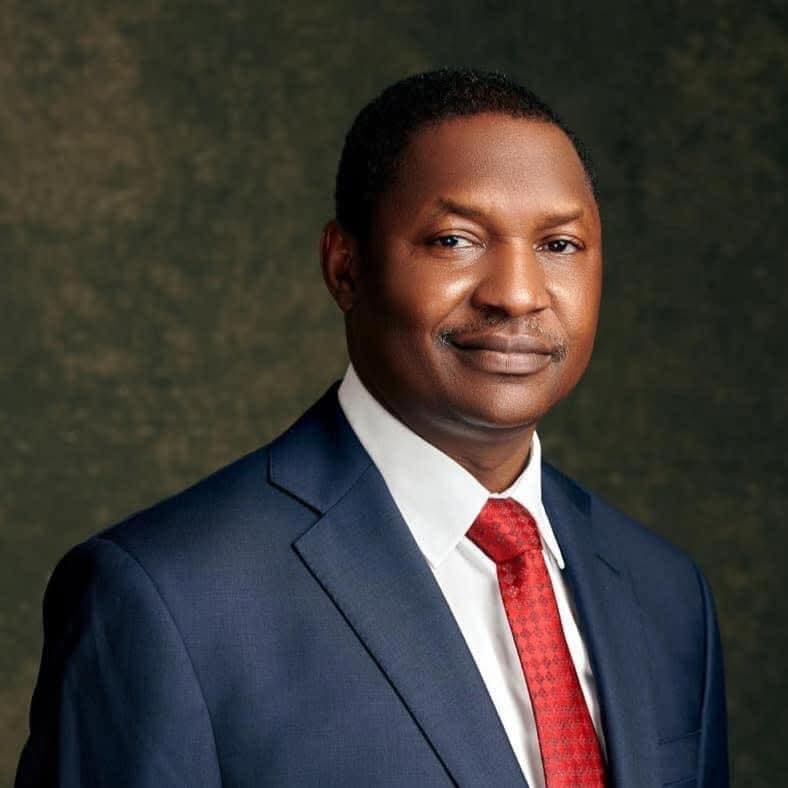
A former Attorney-General of the Federation (AGF), Abubakar Malami (SAN), has told a Federal High Court in Abuja that he earned N374.6 million from salaries, allowances and other official earnings, and received N958 million as gifts from personal friends while in public office.
Justice Emeka Nwite had on January 6 ordered the interim forfeiture of 57 properties allegedly linked to Malami and two of his sons, Abdulaziz and Abiru Rahman Malami, following an ex parte application by the Economic and Financial Crimes Commission (EFCC).
The judge held that the properties were reasonably suspected to be proceeds of unlawful activities and ordered their temporary forfeiture to the Federal Government, directing the EFCC to publish the order in a national newspaper to enable interested parties show cause within 14 days why a final forfeiture should not be made.
However, Malami, through his counsel, Joseph Daudu (SAN), challenged the interim order, alleging that the EFCC obtained it through suppression of material facts and misrepresentation. He urged the court to dismiss the suit, arguing that it violated his rights to property, presumption of innocence and family life, and could lead to duplicative litigation.
In the application marked FHC/ABJ/CS/20/2026 and filed on January 27, Malami specifically contested the forfeiture of three properties listed as items 9, 18 and 48 in the EFCC’s application. The properties include a plot at Lamido Crescent, Nasarawa GRA, Kano; a five-bedroom duplex with boys’ quarters in Wuse II, Abuja, reportedly acquired for N150 million; and the ADC Kadi Malami Foundation Building, purchased for N56 million.
Malami is asking the court to set aside the interim forfeiture order as it affects the three properties and restrain the EFCC from interfering with his ownership and possession of them. He also contended that one of the properties is held in trust for the estate of his late father, Kadi Malami.
In a 14-ground argument, Daudu said the properties were not linked by prima facie evidence to any unlawful activity or specific offence. He added that the assets were duly declared in Malami’s asset declaration forms submitted to the Code of Conduct Bureau (CCB) in 2019 and 2023.
According to the defence, Malami’s declared sources of income include N374.6 million from salaries, estacodes, severance allowances and sitting allowances; N574 million from disposal of assets; over N10 billion turnover from businesses; N2.52 billion in loans to businesses; and N958 million received as traditional gifts from personal friends.
Daudu further disclosed that Malami realised about N509.8 million from the public presentation of his book, Contemporary Issues on Nigerian Law and Practice, insisting that these income streams sufficiently explained the acquisition of the disputed properties.
He argued that the EFCC failed to place any prima facie evidence before the court to justify the interim forfeiture order.
The matter could not be heard as it was not listed on the cause list, having been handled during the court’s vacation. The presiding judge subsequently returned the case file to the Chief Judge for reassignment.
Meanwhile, legal practitioners and civil society groups have raised concerns over Malami’s claim of receiving substantial gifts while in office, noting that Nigerian laws restrict public officers from accepting gifts capable of influencing official conduct.
The Revenue Mobilisation Allocation and Fiscal Commission (RMAFC) has also stated that ministers earn about N7.8 million annually, raising questions about claims of significantly higher monthly earnings attributed to public office.