
 Subscribe: Gist E-Paper
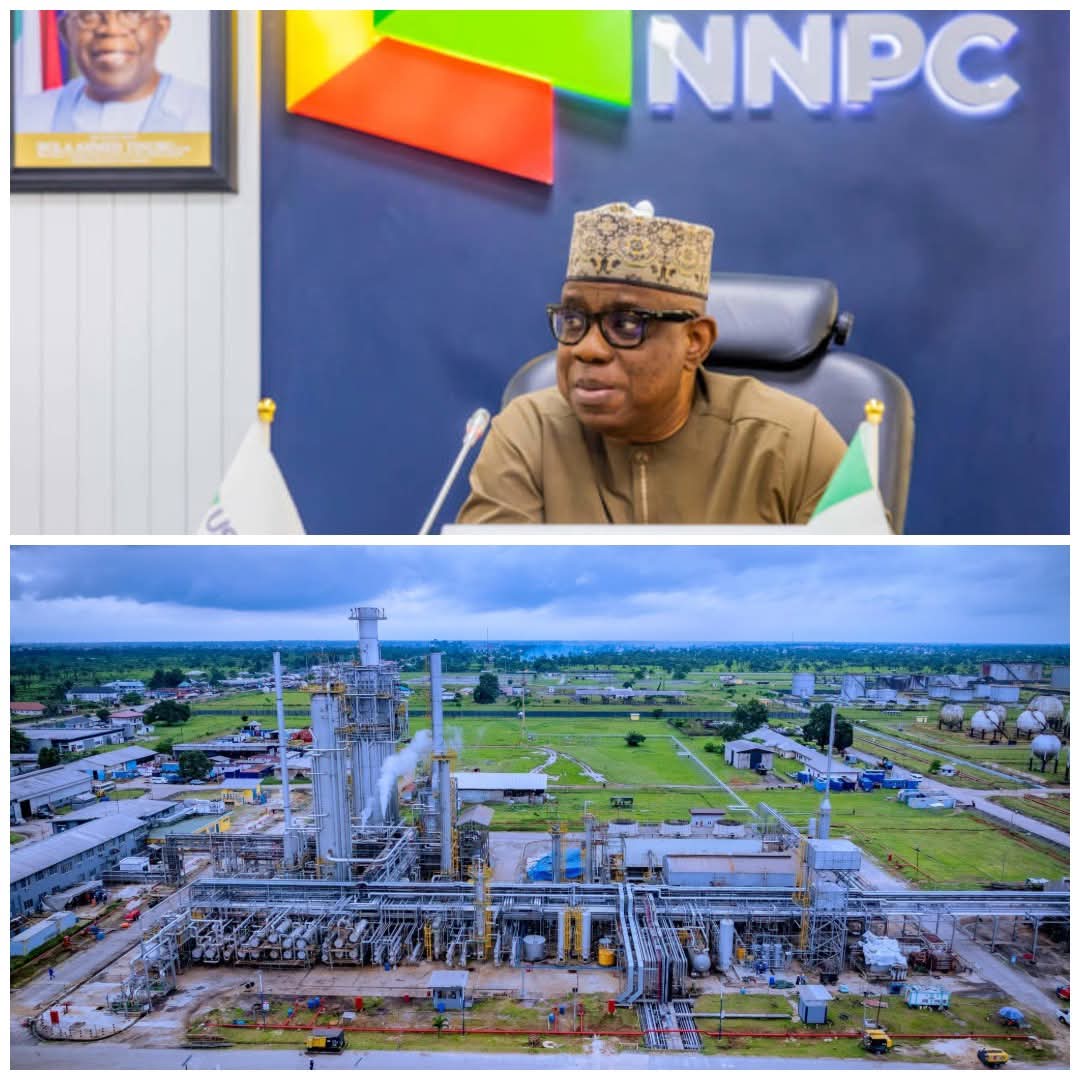
The Nigerian National Petroleum Company Limited (NNPCL) has described the reopening of the Port Harcourt Refinery and Petrochemical Company as a wasteful economic decision, admitting that the facility was operating at huge losses despite a $1.5 billion rehabilitation investment.
The Group Chief Executive Officer of NNPCL, Engr. Bayo Ojulari, made the disclosure on Wednesday while speaking at the ongoing 2026 Nigerian International Energy Summit, saying the national oil company currently lacks the capacity to run refineries profitably.
Ojulari explained that efficient refinery operations require adequate financing, competent Engineering, Procurement and Construction (EPC) contractors, and strong operational and maintenance capacity—conditions he said were absent in NNPCL’s management of the Port Harcourt plant.
The refinery, located at the Eleme axis of Rivers State, was rehabilitated at a cost of about $1.5 billion under the leadership of former NNPCL GCEO, Mele Kyari, and was officially reopened in November 2024 after nearly three years of rehabilitation. However, it was shut down in May 2025 following sustained financial losses.
According to Ojulari, an internal review conducted after his appointment in April 2025 revealed that the refinery was bleeding value despite regular crude supply and operating at between 50 and 55 per cent capacity utilisation.
“The first thing that became clear was that we were running at a monumental loss to Nigeria. We were just wasting money,” he said. “We were pumping cargo into the refinery every month, spending heavily on operations and contractors, yet the net outcome showed continuous value leakage with no clear pathway to profitability.”
It had earlier been reported that the shutdown of the Port Harcourt Refinery cost the Federal Government about $249.7 million (N366.21 billion) within five months, between May 24 and October 31, 2025.
Before its shutdown, NNPCL had said the refinery was producing about 1.4 million litres of Premium Motor Spirit (PMS) daily, alongside 900,000 litres of kerosene, 1.5 million litres of diesel, 2.1 million litres of low-pour fuel oil, and additional volumes of cooking gas.
Ojulari said NNPCL has now shifted strategy, opting to seek partnerships with experienced refinery operators rather than contractors or operations and maintenance service providers.
“We are not looking for contractors. We are looking for entities that actually run refineries successfully,” he said, adding that the company’s board has approved the new partnership-driven approach.