
 Subscribe: Gist E-Paper
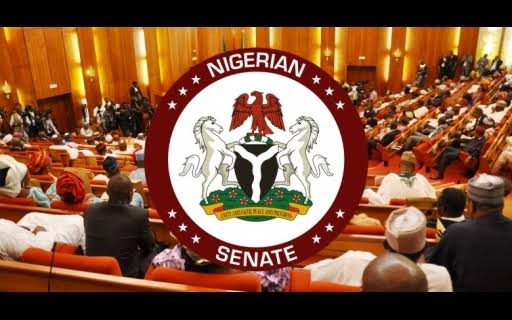
The Senate on Wednesday deferred consideration of the report on the Electoral Act, 2022 (Repeal and Enactment) Bill, 2026, opting for further internal scrutiny through an executive session scheduled for Thursday.
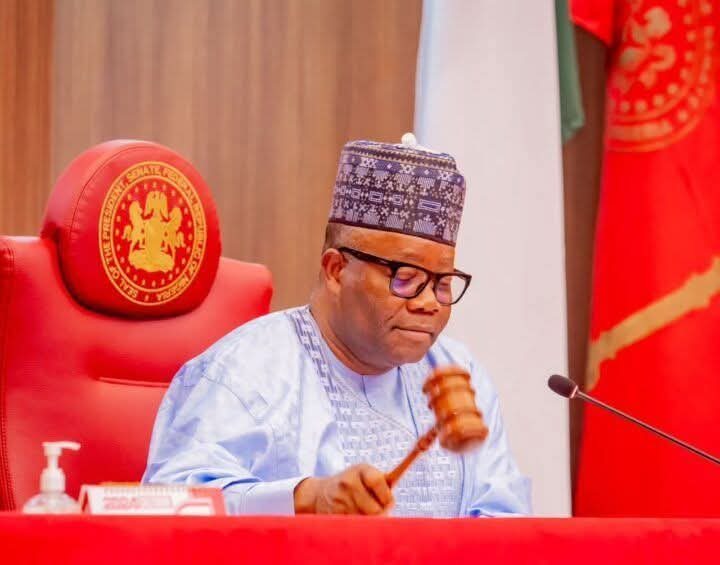
Senate President, Godswill Akpabio, announced the decision during plenary after the Senate Leader, Opeyemi Bamidele (APC, Ekiti Central), requested that copies of the report of the Senate Committee on Electoral Matters be made available to senators for a detailed clause-by-clause review.
Akpabio supported the request, stressing that the upper chamber must exercise caution in dealing with legislation that has far-reaching implications for Nigeria’s democratic process.
“This is a very important bill, especially as we are approaching elections. If we rush it, we may end up at the tribunal. But if we get it right, Nigerians will be assured of free and fair elections,” Akpabio said.
Checks revealed that debate on the general principles of the amendment bill had earlier been listed on the Order Paper for consideration on Wednesday but was later stepped down.
The Chairman of the Senate Committee on Electoral Matters, Senator Simon Lalong (APC, Plateau South), who was expected to present the committee’s report, was absent, prompting brief consultations among the Senate leadership.
Following the consultations, it was agreed that both the presentation of the report and debate on the bill be deferred to the next legislative day.
Bamidele thereafter moved a motion to formally step down the bill until Thursday, explaining that a brief closed-door executive session would precede open deliberations on the proposed amendments. The motion was put to a voice vote and unanimously adopted.
The Electoral Act amendment bill contains about 20 proposals aimed at reforming Nigeria’s electoral framework.
Among the key proposals is the removal of the Permanent Voter Card (PVC) as a compulsory requirement for voting. The amendment to Sections 18 and 47 would allow other forms of identification such as the National Identification Number (NIN), international passport and birth certificate for voter accreditation, in view of the fact that the Bimodal Voter Accreditation System (BVAS) does not rely on the PVC microchip.
The bill also seeks to amend Section 60(5) to make the electronic transmission of election results mandatory. In addition, an amendment to Section 71(2) proposes criminal sanctions for the distribution of unstamped or unsigned ballot papers and result sheets, with penalties of not less than one year imprisonment, a fine of N1 million, or both.
Another major provision proposes a significant upward review of campaign spending limits for all elective offices. Under the proposal, presidential candidates would be allowed to spend up to N10 billion, compared to the current N5 billion, while governorship candidates’ spending cap would increase from N1 billion to N3 billion.
The spending limits for senatorial candidates would rise from N100 million to N500 million, while candidates for the House of Representatives would be permitted to spend up to N250 million, up from N70 million.
For state House of Assembly elections, the ceiling would increase from N30 million to N100 million. Local government chairmanship candidates would be allowed to spend up to N100 million, while councillorship candidates’ limit would rise from N5 million to N10 million.
Although the House of Representatives has already passed the bill, Akpabio reiterated the need for careful and thorough scrutiny by the Senate, given the bill’s far-reaching impact on Nigeria’s electoral system.