 Subscribe: Gist E-Paper

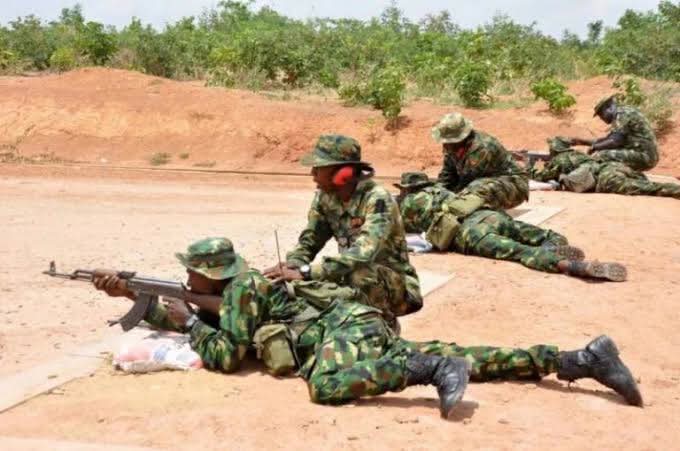
On November 27, President Tinubu’s declaration of a security emergency, accompanied by a directive to recruit police and military personnel in large numbers, represents a significant policy response to Nigeria’s protracted security crisis. While this action signals governmental resolve, a critical examination reveals that a strategy predicated primarily on quantitative augmentation of security forces is fundamentally misguided. This paper argues that the Nigerian Armed Forces are institutionally compromised and that the nature of the conflict is inherently ideological. Therefore, the prescribed way forward is not expansion, but a dual strategy of rigorous internal reform and a concerted ideological campaign to undermine the support base of non-state actors.
Empirical evidence strongly suggests that there is a severe institutional compromise within the Nigerian military apparatus. This is not merely a matter of operational failure but points to systemic issues of infiltration and intelligence leakage. Instances such as the calculated capture of Brigadier General Musa Ubah and the controversial withdrawal of forces from the Kebbi school abduction site are not isolated tactical errors. Instead, they form a pattern of ambushes and security breaches that indicate the presence of a “fifth column” (a subversive element within the security architecture itself). These recurring incidents necessitate a paradigm shift in strategy. Before any expansion of personnel, a thorough, forensic investigation and vetting of the existing force is imperative to identify and excise compromised elements.
The efficacy of a military force is contingent not only on its operational capability but also on its legitimacy in the eyes of the citizenry. Historically, the Nigerian military commanded significant public reverence, making service a coveted honour. This prestige has demonstrably eroded.