 Subscribe: Gist E-Paper

Nigeria’s discourse on state creation has always been a mirror to its history, its hopes, and its fractures. Today, the mirror reflects anew, as Senate President Godswill Akpabio steps into the frame, lending his voice to the longstanding call for an Anioma State. At the South-South APC convention in Asaba, his words did more than signal support—they awakened the delicate interplay of political symbolism, regional pride, and the perennial longing for development.
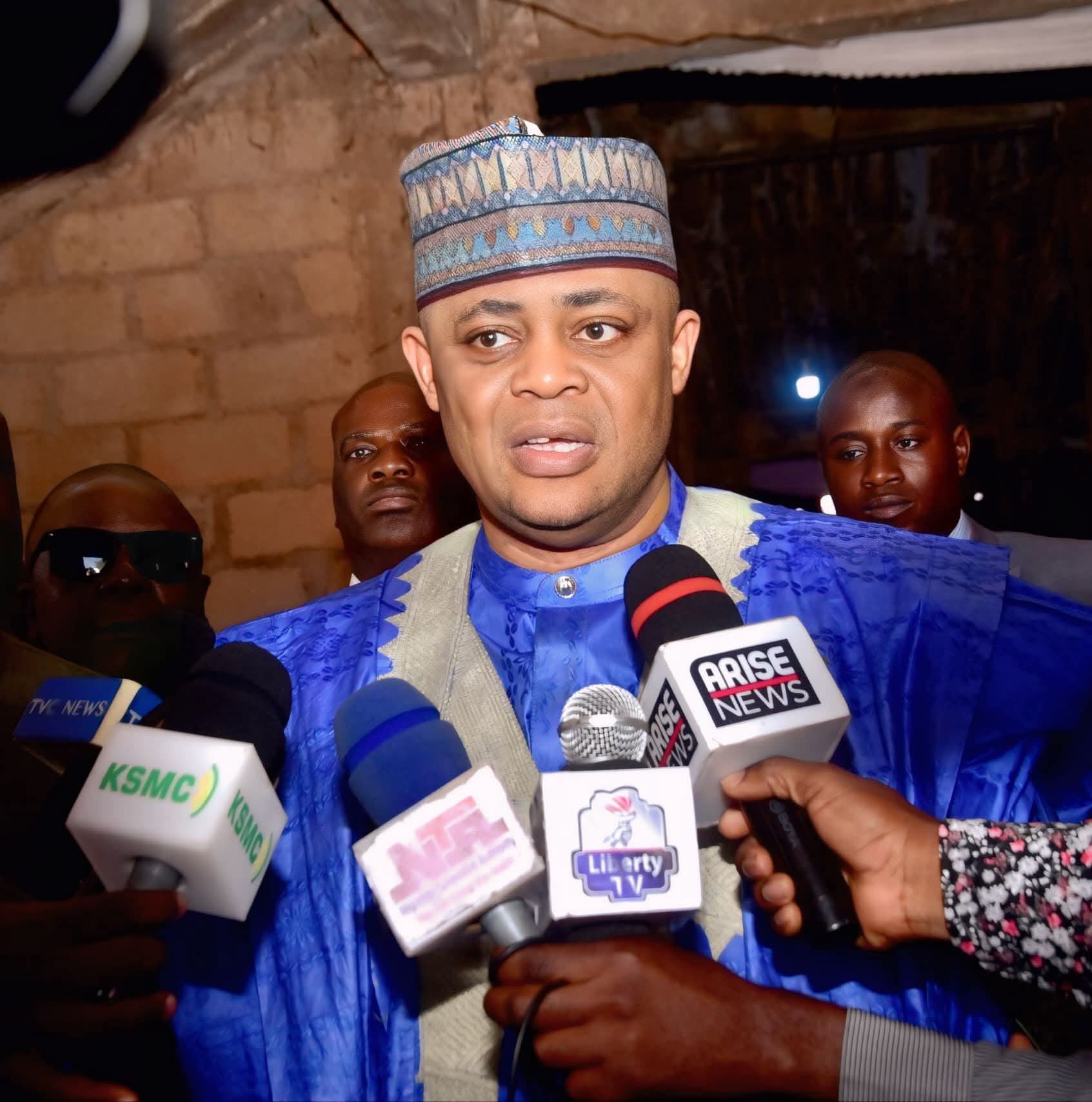
Akpabio’s choice of traditional Anioma attire, thoughtfully provided by Ned Nwoko, was itself a story. In Nigeria, what one wears can speak louder than speeches, carrying whispers of solidarity, echoes of recognition, and the weight of collective memory. On that stage, in fabric and form, he said plainly: “I see Anioma. I hear your heartbeat.” The attire became a canvas on which political intention and cultural respect were painted with subtle precision.
The suggestion to retain Asaba as the capital of a new Anioma State, while keeping Warri as the capital of the residual Delta State, is at once pragmatic and poetic. Pragmatic, because it honors the mechanics of governance; poetic, because it attempts to reconcile history, economy, and culture—the pulse of Warri intertwined with the soul of Anioma communities. It is a delicate balance, a dance of geography and sentiment.
Yet, the path of state creation is rarely straightforward. Endorsement from a figure like Akpabio is a gust of wind in the sails, but it cannot chart the course alone. Constitutional processes, debates in state Houses of Assembly, and a national referendum await. Political gestures illuminate the journey, but law writes the itinerary.
This moment also mirrors a broader rhythm in Nigerian politics: identity and development are rarely disentangled. Communities seeking statehood often speak of marginalization, underdevelopment, and inequitable access to resources. By naming capitals and supporting their quest, Akpabio situates himself as a custodian of regional hope—a conductor orchestrating the chorus of ambition.
Still, new states are not panaceas. History warns of gaps in infrastructure, the burden of bureaucracy, and the latent friction over resources. Progress promised must be carefully nurtured, lest it germinates frustration instead of prosperity.
The symbolism in Akpabio’s gesture reverberates. To endorse Anioma while acknowledging Warri is to practice the art of inclusion, a delicate acknowledgment of a region rich in ethnic diversity and economic significance. Such gestures shape narratives, color electoral canvases, and often precede the machinery of policy and politics.
Economics beats at the heart of the debate. Warri, with its oil veins and industrial might, is not merely a city—it is a lifeline. To preserve its centrality while birthing Anioma demonstrates nuanced understanding: wealth and development must flow equitably, yet economic engines cannot be severed without consequence.
For the average Nigerian, debates on state creation oscillate between hope and wary skepticism. Hope flares at the promise of representation, of better governance, of targeted progress. Skepticism lingers, shadowed by years of unmet promises, political posturing, and delays that leave dreams suspended.
Akpabio’s support exemplifies the gravity of elite influence in regional politics. When prominent figures champion local aspirations, they accelerate dialogue, summon attention, and energize civic participation. Yet, influence is a double-edged sword: what can propel progress can also politicize it, turning state creation into a pawn of negotiation rather than a vehicle of development.
The proposal also reconfigures Delta State’s administrative landscape. Dividing resources, redefining boundaries, and coordinating governance will test political dexterity. Leaders must ensure that Anioma’s birth does not weaken Delta’s body, that the promise of one does not imperil the other.
Cultural recognition threads through the discourse like gold through cloth. Anioma communities have long sought acknowledgment of their heritage. Supporting their statehood is more than politics; it is an affirmation of identity, a step toward cohesion. Akpabio’s public gestures speak in this tongue, bridging governance and belonging.
But endorsement alone is the seed—it must be tended. Constitutional amendments, legislative approvals, and political consensus are the waters and sunlight that nurture it. Energy at conventions must evolve into sustained advocacy, policy drafting, and rigorous legal scrutiny to bear tangible fruit.
Political optics, too, carry weight. Framing state creation as a tool for development transforms perception: from the clamor of ethnic agitation to a vision of regional progress. Such framing can rally support, entice investment, and legitimize the cause in the theater of national discourse.
Yet vigilance is the ever-present companion. In the past, state creation initiatives have faltered under the weight of infighting, elite self-interest, and public fatigue. Continuous dialogue, transparency, and alignment with national priorities remain the compass against derailment.
In essence, Akpabio’s intervention is a lens through which politics, culture, and development converge. It illuminates how leadership, symbolism, and strategy can shape national debates, especially on issues as fraught and aspirational as state creation.
For Anioma and Delta communities alike, the message resounds: opportunities are forged through advocacy, political engagement, and pragmatic vision. Capitals are symbols, but governance, infrastructure, and service delivery will determine the contours of success.
The Anioma debate transcends cartography; it is a testament to Nigeria’s capacity to harmonize identity, equity, and development. Akpabio’s endorsement rekindles the dialogue, reminding the nation that state creation is more than an administrative exercise—it is a political symphony, a cultural affirmation, and a promise of growth yet to be realized.