 Subscribe: Gist E-Paper

The Federal Government's decision to expand the ongoing Lagos-Calabar Coastal Highway project with additional service lanes has triggered widespread concern among property owners, investors and built-environment professionals, as thousands of buildings could be demolished to create room for the new infrastructure.
Fresh estimates indicate that between 1,700 and 2,700 buildings may be affected by the proposed demolition of structures located within a newly designated 15-metre setback along the highway corridor. The development has heightened anxiety among residents and landlords who fear the loss of homes and investments.
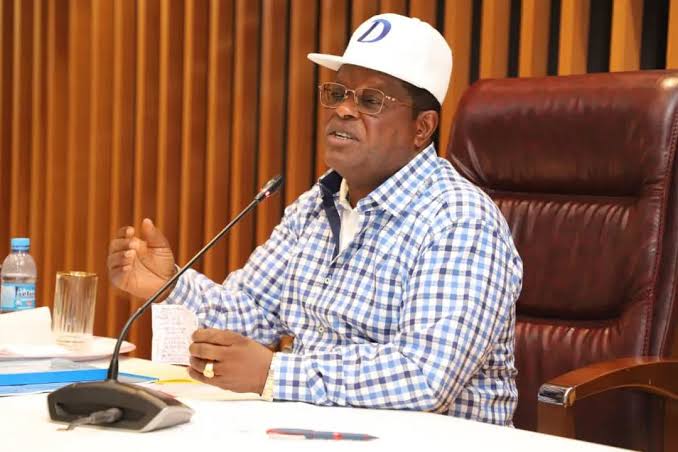
The controversy follows the announcement by the Minister of Works, David Umahi, that buildings encroaching on the expanded setback would be removed to pave the way for service roads and drainage facilities aimed at improving traffic flow, accessibility and safety along the coastal route.
Umahi assured that all affected property owners would receive compensation in accordance with existing laws, insisting that the additional infrastructure is necessary to maximise the long-term benefits of the landmark highway project.
The announcement, however, has generated mixed reactions. While transport and infrastructure experts acknowledge that properly designed service lanes would enhance mobility and support future development along the corridor, others questioned whether the expansion formed part of the project's original blueprint or represents a significant design alteration after construction had already commenced.
Industry stakeholders estimate that about 700 buildings lie directly on the highway's right-of-way, while another 1,700 structures fall within the newly proposed 15-metre setback, raising concerns over the scale of the impending demolitions.
Estate Surveyor and Valuer, Olusola Enitan, projected that the number of affected buildings could rise to as many as 2,700, with between 3,400 and 10,800 households potentially displaced. Based on an average household size of five persons, the number of residents likely to be impacted could range from 17,000 to 54,000 people.
Despite the growing concerns, the Federal Government maintains that the Lagos-Calabar Coastal Highway remains a strategic national infrastructure project designed to strengthen regional connectivity, facilitate trade, promote tourism and unlock economic opportunities across Nigeria's coastal belt.
The project, one of President Bola Tinubu's flagship infrastructure initiatives, commenced in 2024, with the first phase covering 47.47 kilometres from Ahmadu Bello Way in Victoria Island to Eleko Junction in Ibeju-Lekki, Lagos. It is being executed by Hitech Construction Company Limited under an Engineering, Procurement, Construction and Financing (EPC+F) model.
When completed, the approximately 700-kilometre highway will traverse nine coastal states—Lagos, Ogun, Ondo, Edo, Delta, Bayelsa, Rivers, Akwa Ibom and Cross River. The Federal Government has previously estimated the total cost of the project at between $11 billion and $12 billion, equivalent to about ₦14 trillion to ₦15 trillion.