 Subscribe: Gist E-Paper

There are moments in politics when the stage stops behaving like a parliament and starts resembling a rehearsal for stand-up comedy nobody signed up for. The recent rhetorical journey of Senator Adams Aliyu Oshiomhole sits comfortably in that category—somewhere between Shakespearean irony and a man trying to recall his own punchline while the audience has already moved on.
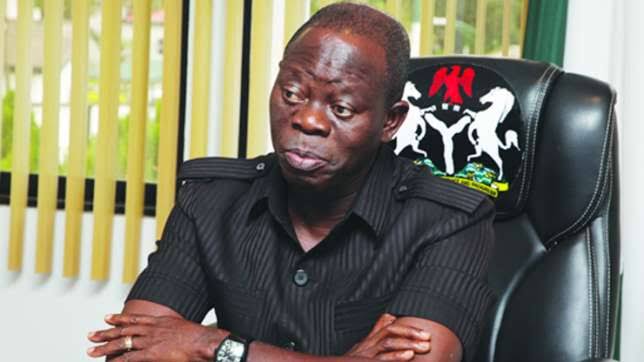
The central character in this unfolding drama is not even his opponent. It is memory. Unforgiving, well-documented memory. The kind that doesn’t need a press release to remind you what you said when you were feeling generous with adjectives.
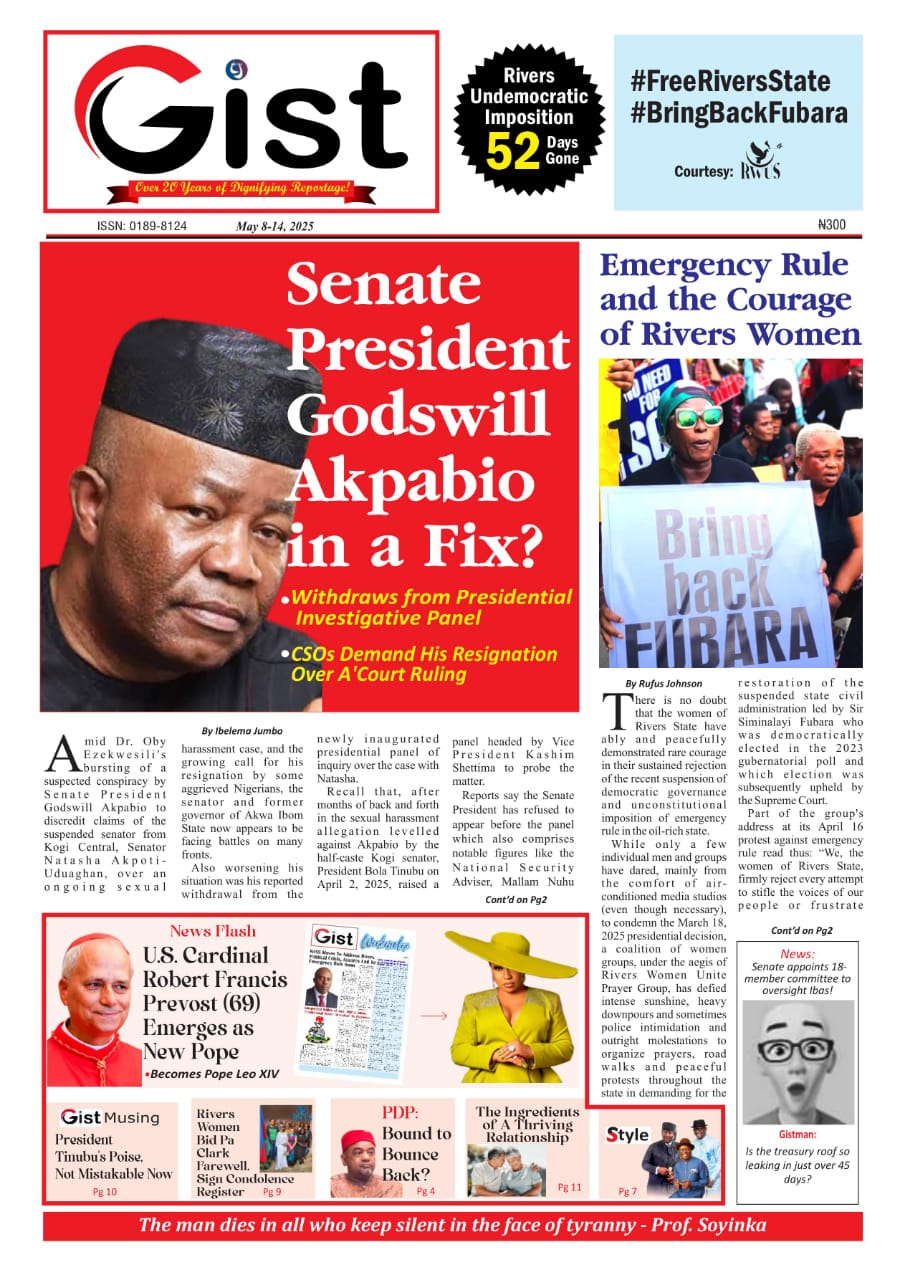
Because in May 2025, Oshiomhole was practically the unofficial public relations officer of the leadership style of Senator Godswill Akpabio. His voice carried the enthusiasm of a man who had discovered governance and suddenly decided it deserved a standing ovation. Everything was harmonious, everything was cordial, everything was—according to him—working so smoothly that even political defection had allegedly become a voluntary dance.
At that time, Akpabio was not just Senate President. He was, in the description of Oshiomhole, a kind of parliamentary magnet, quietly attracting opposition politicians the way light attracts curious insects at night. No drama, no coercion, just gentle persuasion and political sunshine.
And then came the unforgettable line—delivered with the kind of confidence usually reserved for prophecy or overcooked optimism: that Akpabio might deserve a place in the Guinness Book of Records. A statement so large it briefly needed its own oxygen supply.
In that moment, Oshiomhole was not merely speaking. He was applauding with grammar. He was endorsing with enthusiasm. He was practically handing out trophies in advance of any audit committee.
He even went further, insisting that he speaks from conviction. A declaration that, at the time, sounded like the introduction to a testimonial video. The kind where background music fades in and everyone nods slowly in agreement.
Fast forward a few months, and Nigerian politics did what it often does best—it refused to stay consistent.
Suddenly, the same environment that had been described as peaceful and persuasive acquired a new vocabulary. What was once “cordial” began to sound slightly less musical. What was once “voluntary alignment” started to attract more suspicious interpretations. And the same system that was previously praised for calm persuasion was now being examined under a brighter, more interrogative light.
At this point, Oshiomhole found himself in a familiar Nigerian political tradition: the strategic confrontation with one’s past speech.
It is a special kind of crisis. Not external pressure. Not opposition attack. But the sudden realization that Hansard exists, journalists have receipts, and video recordings do not respect political reincarnation.
So the senator is now engaged in what can only be described as an advanced course in rhetorical gymnastics. The goal is simple but difficult: to make praise of yesterday and criticism of today coexist without fighting each other in public.
Unfortunately, words are not very cooperative witnesses. They do not forget. They do not reinterpret themselves. They do not develop “contextual upgrades” after the fact.
The result is a political scenario where the senator appears to be arguing with a man who has the same name, the same face, and the same microphone—but allegedly different beliefs depending on the weather of the moment.
Observers, meanwhile, are left in the most entertaining role of all: audience members at a debate where one contestant is clearly quoting the other contestant from a previous season.
In fairness, Nigerian politics has always had a flair for dramatic re-entry. But the case of Oshiomhole adds an extra layer: the confidence of the earlier praise was so strong that the later reconsideration has to work overtime just to balance the emotional scales.
It is like watching someone admire a building in the morning, call it architectural genius at noon, and by evening begin questioning whether the foundation ever existed at all.
What makes it even more amusing is that his earlier endorsement was not cautious or diplomatic. It was vivid. It had colour. It had personality. It had Guinness Book aspirations attached to it like a souvenir badge.
So now, every attempt to reframe the narrative must first pass through the obstacle course of his own adjectives.
And in the background, Akpabio remains the quiet centre of the storm—neither narrating nor correcting, just existing as the reference point for two competing versions of enthusiasm.
There is a particular irony in all of this: the more confidently a politician speaks in one season, the more dramatically they must explain themselves in the next. Confidence, in politics, is not just persuasive—it is also archival.
At this stage, the public is no longer just listening to what is being said now. They are mentally flipping through what was said before, like an overactive editor checking consistency in a long-running script.
And so the spectacle continues: a distinguished ego wrestling with its own timeline, while reckless words sit quietly in the corner, refusing to be edited out.
If nothing else, Oshiomhole has achieved a rare political feat—he has become both the narrator and the contradiction in his own story. And in the theatre of public life, that is usually reserved for people performing comedy without intending to.