 Subscribe: Gist E-Paper
Tension has heightened within major political parties following the expiration of the deadline for the submission of updated membership registers to the Independent National Electoral Commission (INEC), a key requirement ahead of the 2027 general elections.
The deadline, which ended at midnight on May 10, has intensified political realignments, with analysts suggesting that the All Progressives Congress (APC), the African Democratic Congress (ADC), and the New Democratic Congress (NDC) could emerge as major contenders in the next election cycle.
The 2023 presidential election was largely a three-way contest involving President Bola Ahmed Tinubu of the APC, former Vice President Atiku Abubakar of the Peoples Democratic Party (PDP), and former Anambra State Governor Peter Obi of the Labour Party (LP). However, four years later, internal crises within the PDP and LP have triggered significant defections and political repositioning.
Atiku Abubakar has reportedly aligned with the ADC, while Peter Obi has moved to the NDC, where he has indicated his intention to contest the 2027 presidential election. Obi has publicly stated that he intends to serve only one term if elected. The NDC has also reportedly zoned its presidential ticket to the South, with plans to rotate it to the North in 2031. Former Kano State Governor Rabiu Kwankwaso is widely speculated to be considered as a potential running mate under this arrangement.
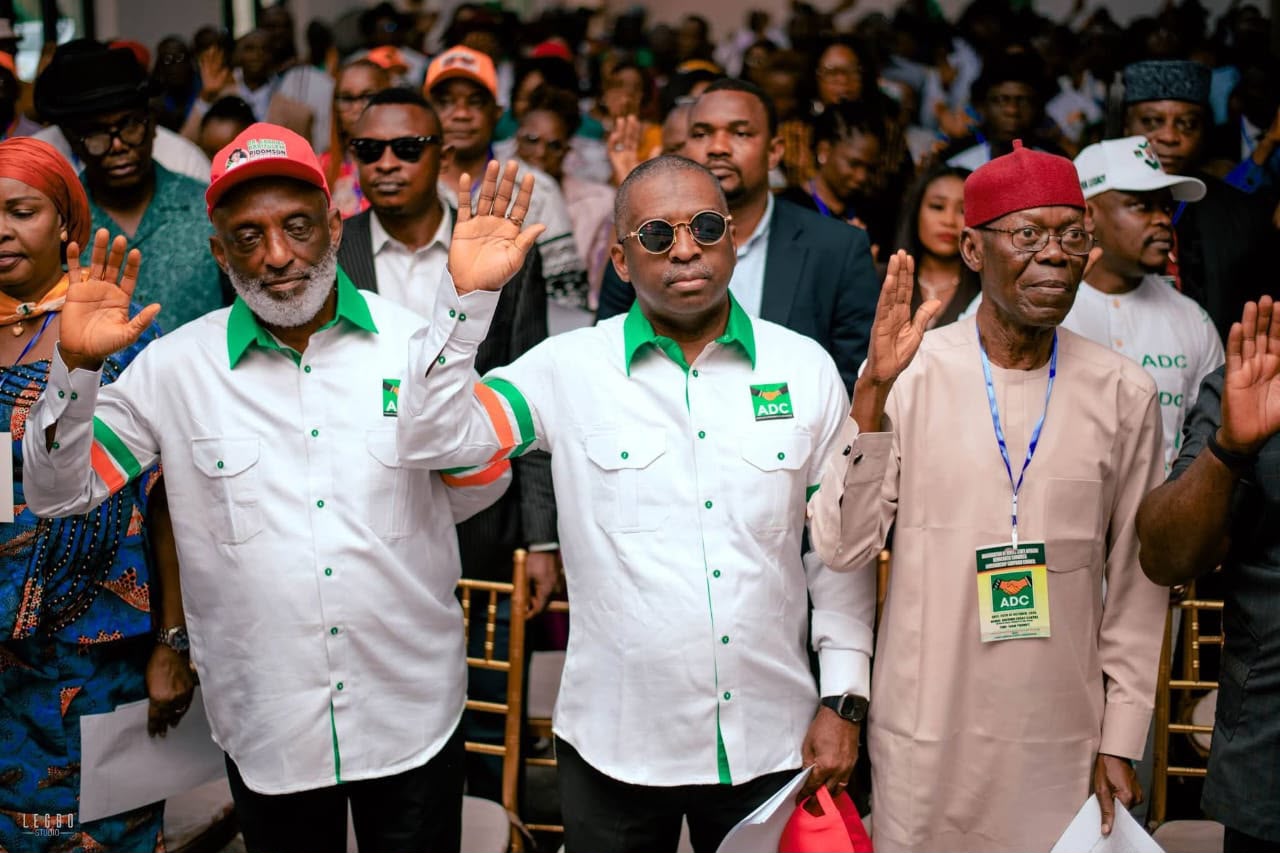
Meanwhile, within the ADC, three prominent figures have shown interest in seeking the party’s presidential ticket. They include Atiku Abubakar, former Minister of Transportation Chibuike Amaechi, and Mohamed Hayatu-Deen. The party has yet to clarify whether it will adopt a zoning arrangement for its ticket.
The PDP, however, continues to grapple with a prolonged internal leadership crisis, raising uncertainty about its preparedness for the 2027 elections. The party is currently divided into two factions—one linked to the Minister of the Federal Capital Territory and former Rivers State Governor Nyesom Wike, and the other aligned with Oyo State Governor Seyi Makinde. Both groups have been engaged in disputes over the party’s legitimate national leadership.
Although a recent Supreme Court decision reportedly upheld the suspension of Wike’s ally, Sam Anyanwu, as national secretary, INEC’s official website, as of May 10, still listed Abdul Rahman Mohamed as national chairman and Sam Anyanwu as national secretary—both associated with the Wike faction. The continued listing has raised questions about the commission’s implementation of court decisions.
Observers have noted that INEC previously acted swiftly in a similar case involving the ADC, where it delisted former Senate President David Mark and former Minister of Interior Rauf Aregbesola following a Supreme Court ruling concerning the party’s leadership structure.
A PDP source, speaking on the condition of anonymity, suggested that INEC’s current position may indicate that the commission is awaiting further legal clarity before making any adjustments to the party’s leadership records.
With the membership submission deadline now closed, political stakeholders are closely watching how parties resolve their internal disputes as preparations for the 2027 elections gather momentum.