 Subscribe: Gist E-Paper
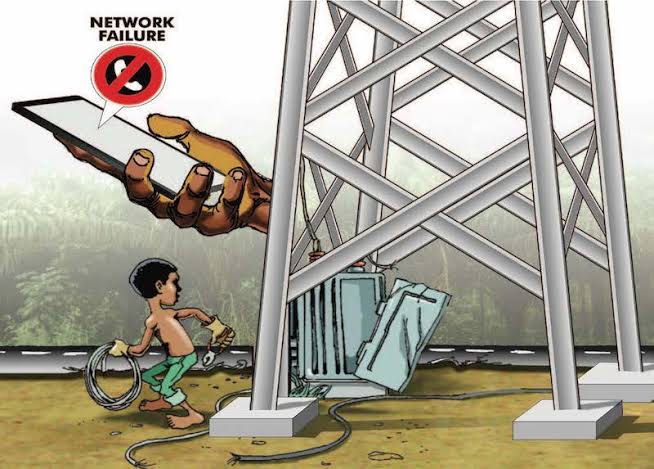
Mounting attacks on telecommunications infrastructure across Nigeria have heightened concerns over the integrity of communication systems critical to the 2027 general elections.
Industry stakeholders warn that persistent vandalism targeting base stations, fibre optic cables, and power installations could severely disrupt network services nationwide, with implications for electoral operations.
The trend follows a wave of coordinated theft and looting incidents reported in at least 14 states, sparking fears over the vulnerability of key national assets less than a year to the polls.
The Independent National Electoral Commission (INEC) depends heavily on stable telecom networks for election logistics, including real-time transmission of results via its Result Viewing Portal, as well as coordination among field officials, security agencies, and collation centres.
Telecommunications systems also underpin voter accreditation, digital reporting, and dissemination of election updates to the public.
Data from the Nigerian Communications Commission (NCC) indicate a sharp rise in attacks, with no fewer than 656 critical power assets stolen in 2025 alone, including 152 generators and 504 batteries. The trend has persisted into 2026, compounding operational challenges in the sector.
The situation is further aggravated by widespread diesel theft, which accounted for 1,344 incidents, alongside frequent fibre optic cuts averaging about 1,100 cases weekly by late 2025—developments that have significantly disrupted network stability.
States most affected include Rivers State, Delta, Cross River, Akwa Ibom, Ogun, Ondo, Edo, Lagos, Kogi, the Federal Capital Territory, Kaduna, Niger, Osun, and Kwara, where criminal groups routinely target telecom sites, carting away vital equipment such as cables, rectifiers, solar panels, and diesel.
Recent figures show that between January and February 2026, an additional 64 batteries and 17 generators were stolen, while cable theft surged sharply compared to the same period in 2025. Diesel theft alone accounted for 222 incidents within the two-month period.
President of the Association of Telecommunications Companies of Nigeria, Tony Emoekpere, described the situation as having escalated beyond routine operational challenges to a full-blown crisis threatening the industry’s survival.
He noted that the loss of essential infrastructure is directly translating into service disruptions, including increased call drops, poor voice quality, and unreliable data services—especially in rural areas where outages can be total.
Telecom expert and Metaheuristic founder, Toye Apampa, warned that the scale of damage could undermine not only electoral systems but broader digital services, pointing to structural weaknesses in Nigeria’s connectivity framework.
Civil society organisations and opposition figures have also weighed in, with some alleging that the pattern of attacks could amount to deliberate sabotage aimed at undermining electoral transparency. Others, however, caution against politicising the issue, urging a focus on strengthening security and infrastructure protection.
The Executive Director of the Civil Society Legislative Advocacy Centre, Auwal Rafsanjani, stressed that safeguarding telecom infrastructure remains the responsibility of the government, noting that the credibility of the elections will depend largely on its commitment to ensuring a secure environment.
Similarly, anti-corruption advocate Debo Adeniran highlighted the broader economic and social implications, warning that continued vandalism could disrupt business operations and public safety while compounding existing challenges around electronic transmission of election results.
He called for robust contingency planning, recommending multiple backup options—including satellite technology and secure manual transmission—to guarantee electoral integrity under any circumstances.
Opposition parties echoed concerns over the implications for democracy and national security, though some urged restraint in linking the attacks directly to political motives.
Meanwhile, INEC has acknowledged the growing concerns. Its Director of Voter Education and Publicity, Victoria Eta-Messi, assured that the commission is assessing the situation and will outline necessary measures to address emerging challenges.
As Nigeria edges closer to the 2027 elections, the resilience of its telecommunications infrastructure—and the government’s response to its protection—may prove decisive in determining the credibility and smooth conduct of the polls.