 Subscribe: Gist E-Paper
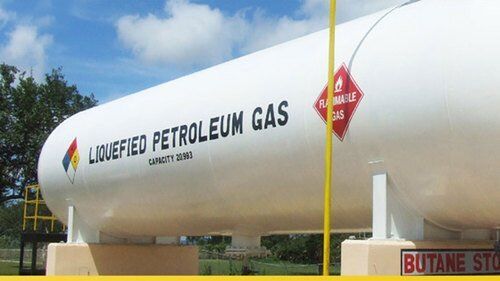
Nigerians across the country have expressed growing frustration over the sharp increase in the price of Liquefied Petroleum Gas (LPG), popularly known as cooking gas, as costs surge to as high as N1,500 per kilogram in several parts of the country.
The development, according to consumers, contradicts the Federal Government’s push for the adoption of clean, affordable and environmentally friendly energy sources, raising concerns about accessibility and sustainability.
Findings indicate that depot prices have also risen significantly, with 20 metric tonnes (MT) of LPG now selling for over N21 million, up from about N18 million recorded in March. The South-South region reportedly bears the highest cost burden, while prices in the northern parts, though slightly lower, continue to trend upward.
In Kano, vendors now sell a 12.5kg cylinder for as much as N16,800, compared to N14,800 previously. A 6kg refill currently costs about N8,400, up from N7,400. At some outlets, however, a kilogram sells for around N1,220, translating to N15,250 for 12.5kg and N7,320 for 6kg.
Residents say the rising prices have forced them to adopt alternative cooking methods. Nasiru Ali, a Kano resident, noted that he sometimes resorts to charcoal use, especially for heating water, as transport costs often erase any price advantage from cheaper outlets.
A civil servant, Mrs. Aduke Joseph, lamented that the rising cost of cooking gas, alongside other living expenses, has further strained her already limited income.
“I now choose specific days to use gas and rely on charcoal at other times,” she said, questioning why such a resource remains expensive despite Nigeria’s abundant natural gas reserves.
Similarly, an Ibadan-based housewife, Ashabi Lawal, said she has temporarily switched to firewood and sawdust due to the unaffordable cost of LPG, adding that her income can no longer sustain regular use of cooking gas.
In Abuja, the situation is not different, as the price of 1kg has climbed to about N1,300, pushing many households toward alternatives like charcoal stoves. Halima Ibrahim said she now depends largely on charcoal, noting that refilling a 6kg cylinder for about N7,800 is no longer sustainable.
Another consumer, David Emmanuel, said he now purchases smaller quantities of gas—two or three kilograms at a time—due to financial constraints.
Industry players attribute the rising costs to a combination of global and domestic factors. A dealer disclosed that retailers buy LPG at between N1,000 and N1,100 per kilogram, leaving a slim margin of about N200 profit, while acknowledging uncertainty over the root cause of the price surge.
Observers, however, point to ongoing geopolitical tensions in the Middle East, which have disrupted global oil and gas supply chains, leading to increased international prices. They also cite the depreciation of the naira and inadequate domestic infrastructure as key drivers of the high cost of imported gas components.
Data shows that Nigeria’s cooking gas supply dropped to about 4.7 metric tonnes per day in February 2026, down from 5.1 metric tonnes recorded in December 2025, reflecting the impact of global energy disruptions.
Despite local production accounting for about 87 per cent of supply in 2025—largely driven by indigenous refineries including NLNG—consumers continue to grapple with rising prices.
A businessman, Rasheed Adeleke, described the situation as unbearable, noting that the cost of cooking gas has significantly disrupted his household budget.
“The rising price is killing. At N1,500 per kilogram, it is no longer sustainable. Combined with erratic electricity and high fuel costs, energy expenses have become overwhelming,” he said.
He called on the government to take proactive measures to boost domestic gas production and stabilise prices, warning that continued increases could discourage Nigerians from adopting cooking gas.
Stakeholders warn that unless urgent steps are taken to improve supply and address pricing challenges, the government’s gas adoption drive may suffer setbacks as more households revert to less environmentally friendly alternatives.