 Subscribe: Gist E-Paper
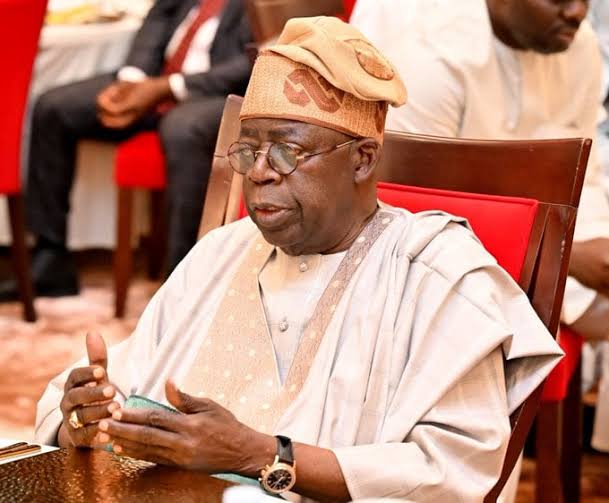
President Bola Ahmed Tinubu on Monday convened an emergency high-level security meeting with service chiefs and heads of intelligence agencies at the State House, Abuja, in response to growing concerns over Nigeria’s security landscape.
The closed-door session brought together key figures in the nation’s security architecture, including the Chief of Defence Staff, General Olufemi Oluyede; Chief of Army Staff, Lt. Gen. Waidi Shaibu; Chief of Naval Staff, Vice Admiral Idi Abbas; and Chief of Air Staff, Air Marshal Sunday Anele.
Also in attendance were the Director-General of the Department of State Services, Oluwatosin Ajayi; Director-General of the National Intelligence Agency, Ambassador Mohammed Mohammed; the Inspector-General of Police, Tunji Disu; and the National Security Adviser, Nuhu Ribadu.
The meeting comes at a critical moment, following heightened security alerts and international concerns, including a recent advisory issued by the United States Department of State.
The advisory authorised the voluntary departure of non-emergency U.S. government personnel and their families from Abuja, citing what it described as a deteriorating security environment. It also placed several Nigerian states under its highest travel risk classification.
In response, the Federal Government downplayed the advisory, describing it as a routine precaution based on internal U.S. protocols rather than an accurate reflection of the overall situation in the country.
Minister of Information and National Orientation, Mohammed Idris, maintained that while security challenges persist in some areas, there is no widespread breakdown of law and order across Nigeria.
Monday’s security meeting also addressed the fallout from a recent airstrike by the Nigerian Air Force in Borno State, which has drawn significant public attention and concern.
The strike, carried out in the Jilli axis along the Borno–Yobe border, was aimed at suspected insurgent positions linked to Boko Haram and ISWAP elements operating in the area.
While the Nigerian Air Force confirmed conducting precision operations against identified targets, it has yet to officially acknowledge reports of civilian casualties arising from the incident.
However, the Presidency defended the operation, stating that the location had been compromised by insurgents and had evolved into a logistics and trading hub for terrorist groups.
According to presidential media aide Tope Ajayi, the site had effectively become a legitimate military target due to its sustained use by armed groups.
The incident has nonetheless sparked debate over the conduct of military operations in civilian-populated areas and the need for enhanced intelligence and safeguards.
Nigeria continues to face a complex web of security challenges, ranging from insurgency in the Northeast to banditry and kidnapping in the Northwest and North-Central regions.
In addition, parts of the South and Southeast continue to experience sporadic violence, further stretching the nation’s security resources.
These overlapping threats have placed sustained pressure on the country’s military and intelligence institutions, prompting calls for more coordinated and proactive responses.
Observers say the outcome of the latest security meeting could shape the government’s next steps in addressing these challenges and restoring public confidence.
As deliberations continue, many Nigerians are looking to the administration for decisive actions that will strengthen security and ensure the protection of lives and property across the country.