 Subscribe: Gist E-Paper
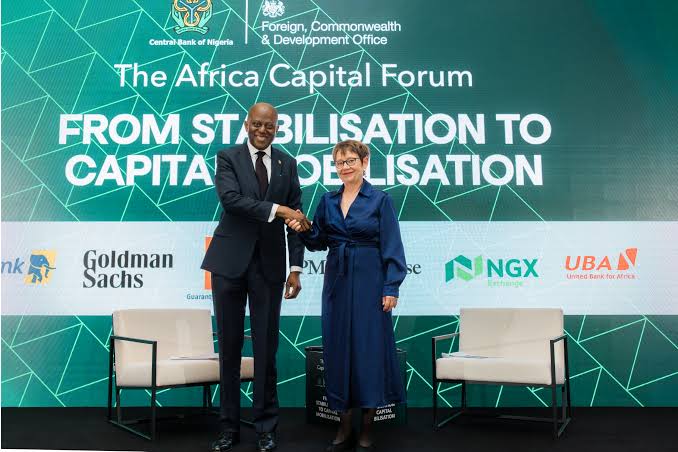
Nigeria’s economy is entering a new phase focused on attracting long-term capital inflows, following nearly three years of sweeping reforms that have strengthened foreign reserves to over $50 billion and significantly reduced inflation.
This outlook was highlighted at the Africa Capital Forum held in London, where global investors, policymakers and development finance institutions assessed the country’s reform progress and future investment prospects.
According to a statement by the Central Bank of Nigeria (CBN), the forum—co-hosted with the Foreign, Commonwealth and Development Office (FCDO)—brought together stakeholders from banking, fintech and international capital markets.
Participants acknowledged that Nigeria’s macroeconomic and structural reforms have improved transparency, stabilised key indicators and restored investor confidence, but stressed the need to convert renewed interest into sustainable, long-term investments.
British Deputy High Commissioner to Nigeria, Jonny Baxter, reaffirmed the United Kingdom’s commitment to supporting Nigeria’s economic transformation, particularly in banking and capital markets, noting improved investor sentiment.
Similarly, Odile Renaud-Basso of the European Bank for Reconstruction and Development pointed to Nigeria’s strong growth fundamentals, including its large population, rising technology adoption and improving economic stability.
Also speaking, Steve Grey of the UK Export Finance emphasised that sustained transparency is critical to maintaining investor confidence. On the domestic front, CBN Deputy Governor, Muhammad Sani Abdullahi, said the foreign exchange market has stabilised, reserves have improved and inflation is trending downward, while Philip Ikeazor noted that reforms are designed to ensure long-term resilience in the financial system.
Representing the Minister of Finance and Coordinating Minister of the Economy, Wale Edun, Special Adviser Sanyade Okoli stressed that government resources alone are insufficient to drive the scale of growth required, underscoring the need for sustained private and foreign investment to power Nigeria’s economic expansion.