 Subscribe: Gist E-Paper
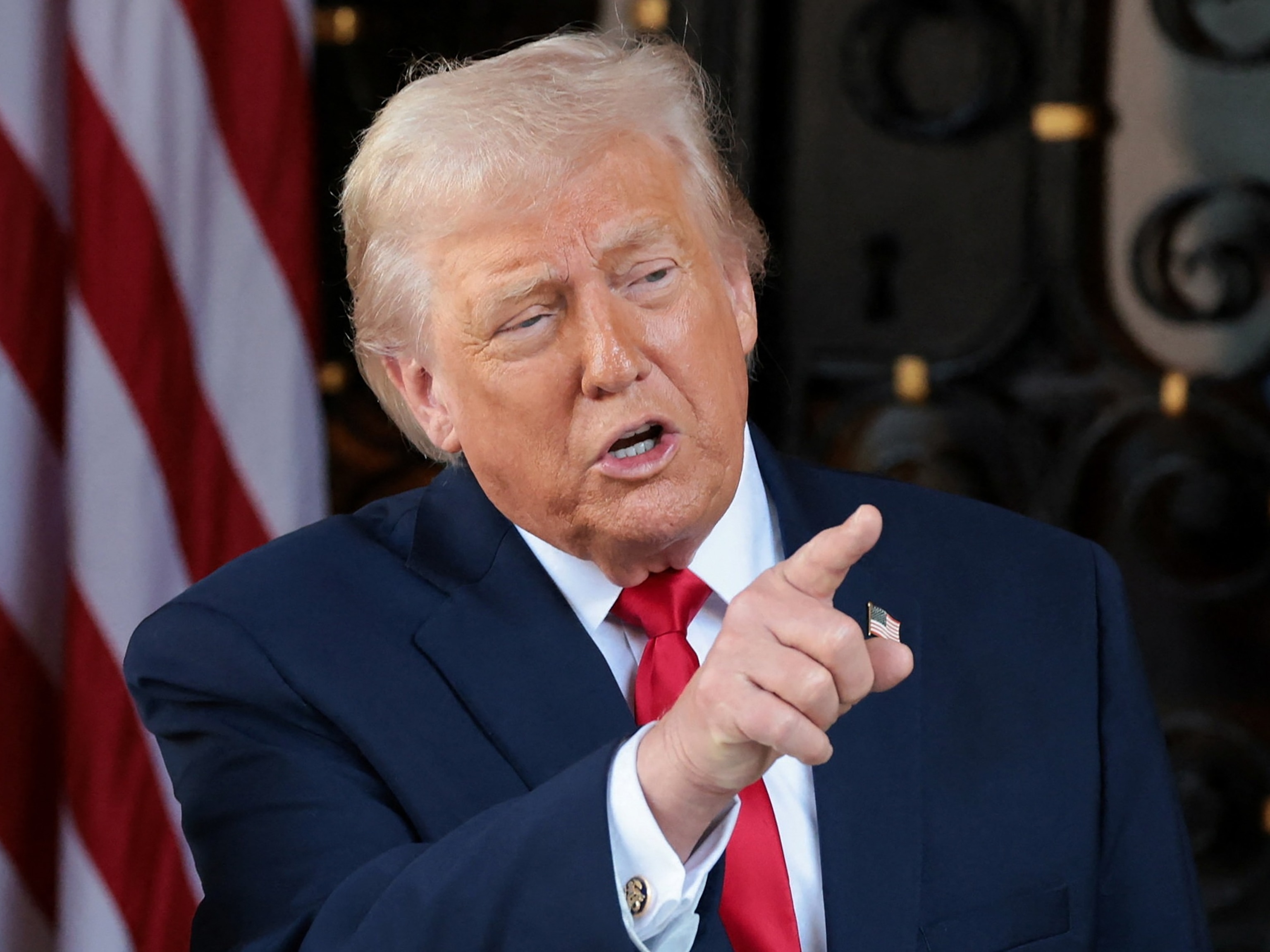
United States President Donald Trump has escalated tensions in Latin America, issuing sharp threats against Colombian President Gustavo Petro and predicting the imminent collapse of Cuba’s government, amid mounting international condemnation of Washington’s controversial seizure of Venezuelan leader Nicolás Maduro.
Speaking to reporters aboard Air Force One on Sunday, Trump described both Colombia and Venezuela as “very sick” countries and launched a personal attack on President Petro, alleging that Colombia’s government was being run by “a sick man who likes making cocaine and selling it to the United States.” He warned that Petro “won’t be doing it very long,” remarks widely interpreted as a threat of possible US action.
When asked directly whether he was suggesting a military operation against Colombia, Trump replied, “Sounds good to me,” further inflaming regional concerns already heightened by the US operation in Venezuela.
Trump’s comments came as Brazil, Chile, Colombia, Mexico, Uruguay and Spain issued a joint statement condemning the US action against Venezuela as a “dangerous precedent for peace and regional security,” warning that unilateral military interventions violate international law and endanger civilians.
President Petro responded forcefully, urging Trump to “stop slandering” him and calling on Latin American nations to unite or risk being treated as “servants and slaves.” In a series of posts on X, Petro recalled that the United States was “the first country in human history to bomb a South American capital,” but stressed that retaliation was not the solution.
Instead, Petro argued for deeper regional cooperation, saying Latin America must become a bloc capable of engaging the global community on its own terms. “We do not look only to the north, but in all directions,” he said.
Trump, however, doubled down on his rhetoric, insisting that the United States was now “in charge” of Venezuela, despite the country’s Supreme Court appointing Vice President Delcy Rodríguez as interim leader. He also reiterated threats to redeploy US forces to Venezuela if the country “doesn’t behave.”
Turning his attention to Cuba, Trump claimed the island nation was nearing collapse, arguing that its economy had been crippled by the loss of subsidised Venezuelan oil. “Cuba is ready to fall,” he said repeatedly, adding that direct US military intervention would be unnecessary because the government appeared to be weakening on its own.
Trump also issued a warning to Mexico, accusing it of failing to curb the flow of illegal drugs into the United States. While describing Mexican President Claudia Sheinbaum as “a terrific person,” he said he had repeatedly offered to send US troops to assist Mexico, citing the strength of drug cartels operating in the country.
The US president’s remarks are part of a broader pattern of confrontational statements toward left-leaning governments in the region. In recent days, Trump warned that Petro should “watch his a**” and described Cuba as a “failing nation,” signalling renewed interest in asserting US dominance in the Western Hemisphere.
Trump has openly embraced a revival of the Monroe Doctrine, the 19th-century policy asserting US influence over Latin America, branding his modern version the “Don-roe Doctrine.”
Analysts remain divided on whether Trump intends to act on his threats or is using aggressive rhetoric as a pressure tactic. David Smith, an associate professor at the University of Sydney’s US Studies Centre, said Trump often relies on dramatic displays of force to coerce other countries into compliance without sustained military engagement.
Matthew Wilson, a political scientist at Southern Methodist University, suggested that Cuba would be the most likely target of any further escalation, citing longstanding US hostility toward Havana and the influence of Cuban-American political groups.
US–Cuba relations have remained strained since the 1959 Cuban Revolution led by Fidel Castro, which ushered in decades of hostility between Washington and Havana. Analysts warn that Trump’s latest statements risk deepening instability across the region at a time of already heightened geopolitical tension.