 Subscribe: Gist E-Paper

There are seasons in politics when the battle is fought less with manifestos than with maps. Alliances are redrawn, old friendships are tested, political territories are marked afresh, and men who yesterday sat on the same side of the table suddenly discover that the table has become too small for their ambitions. Nigeria appears to be entering one of such seasons as the All Progressives Congress and the political network around the Rainbow Coalition move into an increasingly open contest for influence ahead of the 2027 elections.
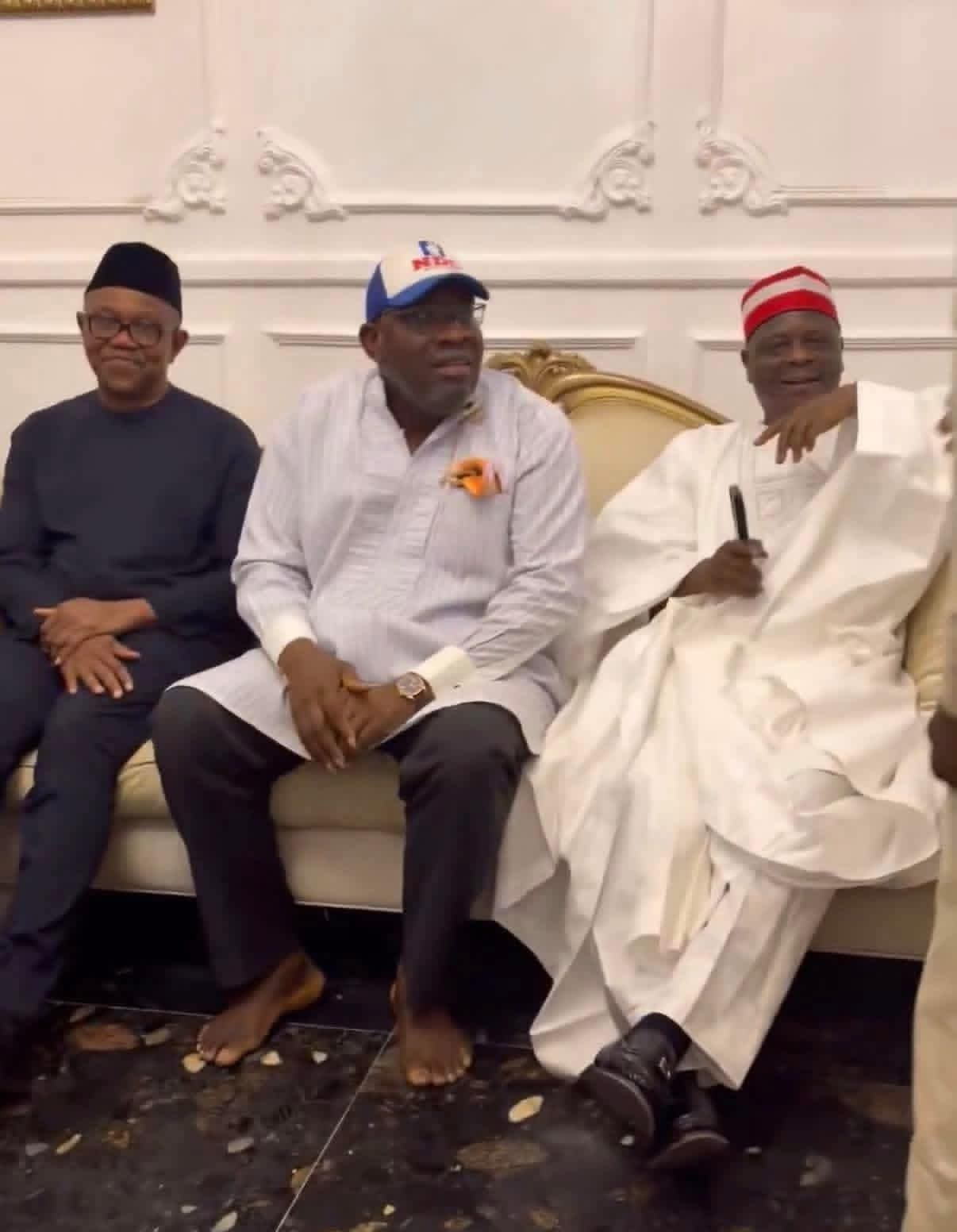
The Rainbow Coalition, associated with FCT Minister Nyesom Wike, occupies an unusual position in this emerging equation. Its stated objective is not simply to challenge the governing APC at the presidential level, as the coalition is also reported to be supporting candidates outside the APC in governorship and legislative contests. That arrangement inevitably creates an interesting contradiction: a political platform can support President Bola Tinubu’s re-election while simultaneously backing candidates who may be challenging APC structures in the states. In Nigerian politics, however, contradiction has never been an unfamiliar companion of coalition-building.
The APC, for its part, appears determined not to concede political space without a fight. At its recent three-day retreat in Maiduguri, the party’s leadership projected confidence in its national structure and dismissed the electoral threat posed by opposition formations such as the African Democratic Congress and the Nigeria Democratic Congress. National Chairman Nentawe Yilwatda pointed to recent electoral performances as evidence of the party’s organisational strength, arguing that the opposition parties were participating in elections rather than mounting a serious challenge to the ruling party.
But politics, like weather, is rarely measured accurately by looking through only one window. A party’s confidence in its machinery is one thing; the movement of politicians, supporters and interests across political boundaries is another. The contest that is now unfolding in several states suggests that beneath the reassuring language of party retreats and confidence votes, there is a more complicated struggle over who controls the political future of individual states.
Ogun offers one illustration. The reported contest between PDP candidate Ladi Adebutu and APC candidate Senator Solomon Adeola is already attracting attention, with both camps possessing substantial political and financial resources. Adeola has the backing of Governor Dapo Abiodun, while questions surrounding his claim to state origin have entered the political conversation. Adebutu, meanwhile, is reported to be receiving support from the Rainbow network. The eventual contest will be shaped not merely by personalities, but by organisation, local alliances, voter sentiment and the ability of each political camp to translate resources into electoral support.
Kebbi presents another layer of the unfolding drama. Former governor and serving Senator Adamu Aliero is reported to be working with the Rainbow Coalition in an effort to challenge Governor Nasir Idris, whose political roots are associated with former Governor and current Minister of Budget and Economic Planning, Abubakar Atiku Bagudu. Here, what might ordinarily appear to be a straightforward contest between party structures becomes a meeting point of old political relationships, present officeholders and competing networks. Nigerian politics has a long memory, and former allies can become formidable opponents when circumstances change.
In Imo, the picture is even more crowded. Governor Hope Uzodimma, former Governor Rochas Okorocha and PDP candidate Senator Sam Anyanwu represent three distinct political currents. Anyanwu’s association with the Rainbow Coalition adds another dimension to the contest, while the reported dispute involving Okorocha and the APC senatorial ticket demonstrates how intra-party disagreements can sometimes be as consequential as battles between opposing parties. The lesson is familiar: political parties may wear different colours, but the most intense battles can occasionally take place within the same political family.
Kwara tells yet another story. The reported emergence of Saliu Mustapha as a PDP candidate after failing to secure the APC senatorial ticket, alongside the contest involving PDP governorship candidate Bolakale Kawu and APC’s Yakubu Danladi-Salihu, shows how the redistribution of political loyalty can alter familiar electoral calculations. With former Senate President Bukola Saraki reportedly backing Mustapha, the state’s political contest is acquiring the character of a broader struggle among established networks rather than a simple APC-versus-PDP encounter.
Then comes Ebonyi, where the political temperature has been met with a firm denial. Works Minister Dave Umahi has rejected suggestions that a Rainbow Coalition structure exists in the state, insisting that Ebonyi remains aligned with the APC and its candidates. His remarks are significant because they demonstrate that the influence attributed to the coalition is not uniformly acknowledged across the states where it is said to be operating. Umahi also warned against hate speech and attempts to foment crisis, underscoring the importance of keeping political competition within peaceful democratic boundaries.
The broader question, therefore, is not merely whether the Rainbow Coalition exists in one state or another. It is what such a coalition represents in a political system where formal party structures increasingly coexist with informal alliances. A politician may belong to one party, maintain a relationship with another political bloc and support a presidential candidate while opposing that candidate’s party structure at the state level. To an outsider, this may look like political inconsistency; to the experienced Nigerian political actor, it may simply be coalition arithmetic.
The APC's response is equally revealing. By emphasising its victories in recent by-elections and its organisational review from the national level down to polling units, the ruling party is signalling that it intends to meet emerging alliances with its own machinery. Yilwatda’s argument that the APC defeated some opponents in recent contests is a reminder that political momentum should not be declared solely from press conferences or social-media enthusiasm. Elections ultimately provide the harder measure, although individual by-elections and off-cycle contests do not necessarily predict the outcome of a nationwide general election.
And that distinction matters. The 2027 contest is still ahead, and the political landscape can change repeatedly before Nigerians cast their ballots. Candidates may switch platforms, alliances may collapse or expand, internal disputes may produce new alignments, and voters may respond to issues that political strategists have not yet fully anticipated. The confidence of the APC and the ambitions of the Rainbow Coalition are therefore both claims awaiting the verdict of the electorate.
What is particularly fascinating about the emerging struggle is that the Rainbow Coalition is not presenting itself simply as another conventional opposition formation. Its reported strategy of supporting Tinubu at the presidential level while backing non-APC candidates in some state and legislative contests creates a political architecture that cuts across the traditional government-versus-opposition divide. Whether that architecture can endure the pressures of competing interests is a question that only time—and ultimately the voters—can answer.
For the APC, the challenge is equally clear: maintaining the cohesion of a governing party while accommodating the ambitions of governors, ministers, former officeholders and aspirants whose interests do not always point in the same direction. For the Rainbow Coalition and its allies, the challenge is converting political relationships and dissatisfaction within established structures into durable electoral organisation. Neither task is easy. Nigerian elections have repeatedly demonstrated that the distance between political excitement and electoral success can be considerable.
So, as the political drums grow louder across Kwara, Ogun, Benue, Kebbi, Ebonyi, Imo, Enugu, Nasarawa, Gombe and elsewhere, the real story may not be the colour of the coalition or the size of the ruling party's machinery. It may be the growing importance of political networks that operate beyond the neat boundaries of party labels. The elephant may still command the largest political room, but the rainbow has appeared across several windows. Whether it becomes a passing arc or a lasting feature of Nigeria's political sky will depend not on the declarations of politicians, but on the organisation of the competing camps and, above all, the choices Nigerians eventually make at the ballot box.